
How to Pack Fragile Items For a Move
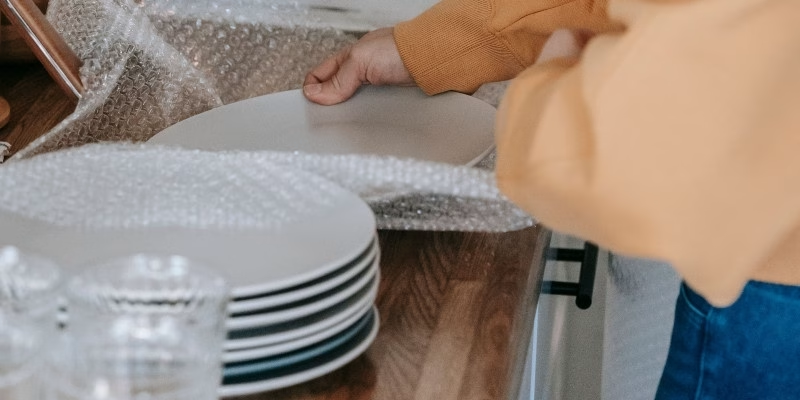
Knowing how to pack fragile items for moving is one of the most valuable things you can do before a move. It’s also one of the areas where people most commonly cut corners, and where those shortcuts show up most clearly on the other end.
At Keepsake PCO, we pack homes professionally across the Twin Cities. We also work alongside our partners at College Muscle Movers, which gives us access to something most packing guides don’t have: real data on what actually gets damaged during moves, and why. Based on claims data spanning over five years and tens of thousands of moves, the items that get damaged most often aren’t always the ones people worry about most. That gap is what this guide is built around.
Pack every fragile item individually, use the right box for the job, and make sure nothing can shift inside the box. The items most commonly damaged during moves are lamps, mirrors, and flat-screen TVs, not dishes and glassware, which most people focus on. Proper wrapping, the right box size, and clear labeling are the three things that make the biggest difference.
The Most Common Packing Mistakes
Before getting into specific items, it’s worth understanding what goes wrong. In my experience packing homes professionally, the same mistakes come up repeatedly:
Using the wrong box size. Overloading a box until it’s too heavy compromises the structural integrity of the cardboard. Boxes should feel solid and supported, not bowing at the bottom. Heavy fragile items like dishes go in small boxes specifically so the weight stays manageable.
Leaving items unboxed. Loose items on the truck shift during transit and are the first things to get damaged. Everything fragile needs to be in a box, not just sitting on a truck pad.
Not padding inside the box. A wrapped item placed in a box with empty space will shift and compress when other boxes are stacked on top. Every box needs a cushioned base, padding between items, and fill at the top before sealing.
Not labeling boxes as fragile. This one seems obvious but gets skipped constantly. A box that isn’t labeled “FRAGILE” gets treated like any other box. It will have things stacked on it. It will be carried differently. Labeling matters.
Trying to save time on wrapping. Cutting corners on materials during packing adds those costs back in the form of damage and, during a professional service, extra time spent securing loose items on the truck.
First Some Perspective: How Common is Damage During a Move?
Before diving into specific items, it’s worth putting this in context. Damage during a professional move is the exception, not the rule. Based on CMM’s move data since 2020, 96.4% of moves had no damage to a customer’s belongings at all.
That said, when damage does happen, it’s often preventable. Improperly packed items, boxes that weren’t labeled, or fragile items left unboxed account for a meaningful share of damage claims. Proper packing on the customer’s end is one of the most effective things you can do to protect your belongings on a professional move.
What Items Get Damaged Most During a Move
Based on CMM’s claims data spanning over five years and tens of thousands of moves, here are the fragile items that generate damage claims most often. The results may surprise you.
Lamps are the most frequently damaged genuinely fragile item. Glass shades separate from the base during carrying, shatter when set down too hard, or break when the lamp slips out of a mover’s hands. Lamps are awkward to carry, easy to underestimate, and rarely packed with the care they deserve.
Mirrors follow closely. Most mirror damage happens not during loading but during unloading, when wrapping is removed carelessly and a corner catches on something, or when two people handling a large mirror misjudge the weight distribution.
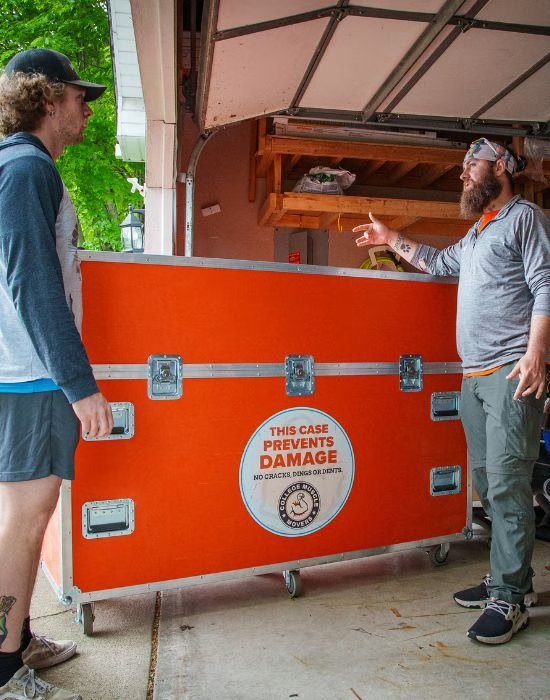
Flat-screen TVs round out the top three. Cracked corners and screen damage from transit are the most common claims. Most TV damage is preventable with the right box. College Muscle Movers offers a hard-sided TV Road Case that is specifically designed to prevent damage to flat screens.
Art frames and framed prints are frequently damaged when stacked flat rather than stored vertically, or when the glass isn’t protected separately from the frame.
Dishes and glassware, by contrast, generate far fewer claims than most people expect. This is likely because dish packing is well understood and people tend to take it seriously. The irony is that the items people worry about most are the ones they pack most carefully, while lamps, mirrors, and large framed pieces often get treated as afterthoughts.
How to Pack Fragile Items By Category
How to Pack Dishes and Plates
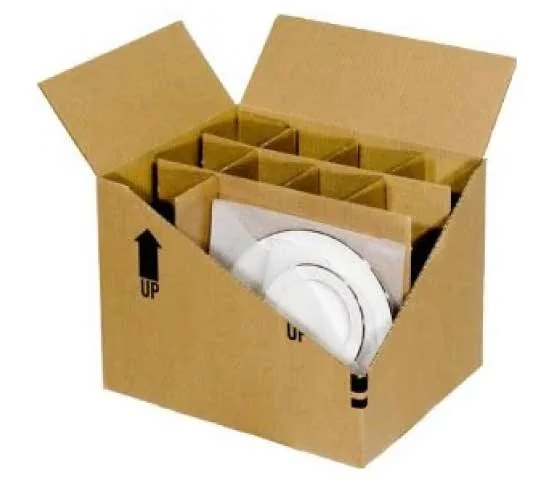
Use dish pack boxes, which are double-walled boxes specifically designed for kitchen fragiles. Standard moving boxes don’t offer the same protection for stacked dishware. College Muscle Movers sells packing supplies including dish pack boxes with volume discounts and pickup available at their St. Paul warehouse.
Each plate gets individually wrapped in packing paper. Wrap from one corner, roll diagonally, and tuck the ends in. For extra protection on fine china or anything valuable, follow the packing paper with a layer of bubble wrap.
Line the bottom of the box with at least two inches of crumpled packing paper before placing any dishes. Add a layer of paper between each row of plates. Fill any empty space at the top before sealing. The box should feel snug and solid rather than hollow.
How to Pack Glasses and Stemware
Glasses go in dish pack boxes as well. Stuff the inside of each glass with crumpled packing paper first, then wrap the outside. Stemware is particularly fragile at the stem, so wrap that area with extra bubble wrap and tape it.
Pack glasses upright, not upside down. Line the box with cushioning and add paper between each glass so nothing touches directly. Never stack glasses directly on top of each other.
How to Pack Lamps
This is the category that generates more damage claims than any other fragile item. The base and the shade need to be packed separately.
The shade: Lamp shades should be individually wrapped in packing paper and packed in their own box with cushioning around all sides. Do not stack anything inside or on top of a lamp shade box. Label it “FRAGILE, DO NOT STACK.”
The base: Wrap the base in bubble wrap and secure with tape. Pack in a box that fits snugly with padding around all sides. Remove the bulb and pack it separately.
The hardware: Remove the u-shaped metal piece, screw cap, and any other detachable parts. Wrap them in paper and pack in a small bag taped to the inside of the base box so nothing gets lost.
How to Pack Mirrors
Mirror damage most often happens during unloading and unwrapping, not transit. The lesson: pack mirrors well enough that the person unwrapping them at the other end can do so without a corner catching on anything.
Small mirrors can be wrapped in several layers of packing paper and bubble wrap, then placed in a box with padding on all sides. Position the mirror vertically rather than flat. Mirrors stored horizontally are more vulnerable to pressure damage.
Large mirrors should be in picture boxes or mirror boxes if possible. These boxes are specifically sized for flat rectangular items and keep the mirror from shifting. Tape an X of masking tape across the glass surface before wrapping. If the glass does crack in transit, the tape holds the pieces together and prevents a dangerous unwrapping situation.
Always label mirror boxes “THIS SIDE UP” and “FRAGILE.”
How to Pack Flat-Screen TVs
A TV box is worth the investment. Most TV damage is corner damage or screen cracking from contact with another item, both of which a proper TV box prevents. If you no longer have the original packaging, specialty TV boxes are available in several sizes.
If you must pack a TV without a box, wrap it in at least two layers of bubble wrap and secure the wrap with tape. Add foam corner protectors if available. Place the TV upright (never flat) against the truck wall and secure it so it can’t shift.
Remove the stand and pack it separately. Label the TV packaging clearly and mark it as fragile.
How to Pack Framed Art and Prints
Picture boxes are the right tool for framed art, designed to hold flat rectangular items securely. For valuable or large pieces, use corner protectors and wrap the glass face separately with bubble wrap before boxing.
When loading, frames and art pieces should always be stored vertically, not flat. Stacking heavy boxes on top of a flat-packed frame is one of the most common ways glass gets broken.
For very large or valuable artwork, consider having it professionally crated. This is particularly important for anything irreplaceable.
How to Pack Ceramics, Vases, and Decorative Items
Irregularly shaped items get handled on a case-by-case basis. The goal is to eliminate any space inside the box where the item can shift. Fill hollow interiors with crumpled paper before wrapping the outside. Use bubble wrap for the exterior and make sure the item sits snugly in a box with padding on all sides. If two fragile items are going in the same box, they should never touch each other directly.
Labeling and Loading Fragile Boxes
Label every fragile box on at least two sides, including the top. Write “FRAGILE” clearly and add directional labels (“THIS SIDE UP”) where relevant. A box that isn’t labeled will be treated like any other box.
Fragile boxes should be loaded last onto the truck so they come off first. They should be positioned on top of heavier boxes, never underneath. During unloading, set fragile boxes in a designated area away from foot traffic before opening. If you hire professional movers, they will know how to handle your fragile boxes.
When it Makes Sense to Hire Professional Packers
Packing fragile items properly takes time, materials, and attention to detail. When budget is tight, hiring professional packers for the kitchen specifically and handling the rest yourself is often the most practical approach. The kitchen has the highest concentration of fragile items and is consistently the most time-consuming room in the house to pack.
For a larger home, a full professional pack is a genuine time and energy investment that removes the major stress of packing entirely. When it comes to our packing services, about 1 in 4 are partial packs, where customers hire us just to pack the areas that require the most care.
If you are interested in some extra help before your move, get a packing quote from Keepsake PCO. Planning to take care of all the packing yourself? Check out our complete guide to packing for a move to make sure you don’t miss anything.
FAQs About How to Pack Fragile Items
What is the most commonly damaged fragile item during a move?
Based on claims data from our partners at College Muscle Movers, spanning over five years and tens of thousands of moves, lamps are the most frequently damaged genuinely fragile item, followed by mirrors and flat-screen TVs. Dishes and glassware, which most people focus on when packing, generate far fewer claims. This is likely because people pack them more carefully.
Do I need special boxes for fragile items?
Yes, for dishes and glassware you should use dish pack boxes, which are double-walled and significantly more protective than standard moving boxes. For TVs, a TV box is worth the investment. For large mirrors and framed art, picture boxes or mirror boxes keep flat items from shifting. For everything else, the key is matching the box size to the item so there’s minimal room for movement.
How do I pack a lamp for moving?
Pack the base and shade separately. Wrap the shade in packing paper and box it with cushioning on all sides. Never stack anything on a lamp shade box. Wrap the base in bubble wrap and pack snugly. Remove the bulb, harp, and hardware and pack them separately. Label both boxes “FRAGILE.”
Is bubble wrap or packing paper better for fragile items?
Both serve different purposes. Packing paper is better for wrapping individual items and filling space inside boxes. It’s more flexible and less bulky. Bubble wrap provides more impact protection for items that are likely to take a knock, like glass surfaces, lamp bases, and electronics. For most fragile items, use packing paper first and bubble wrap as a second layer for anything particularly vulnerable.
When should I hire professional packers for fragile items?
If you have a large number of fragile items, limited time, or items of significant monetary or sentimental value, professional packing is worth considering. At minimum, hiring packers for the kitchen, where fragile items are most concentrated, and handling other rooms yourself is a practical approach that balances cost and protection.
About the Author

Claire Hensley
Cleaning Specialist
Claire Hensley is a cleaning specialist at Keepsake PCO with hands-on experience helping Twin Cities homeowners maintain cleaner, more comfortable homes. Claire writes about cleaning tips, home maintenance, and what professional cleaning actually looks like from the inside.
More Motivation & Tips
How to Keep Your House Clean When Busy
Wondering how to keep your house clean when busy? Simple, realistic systems from a Twin Cities cleaning pro that work with your actual schedule.

Back to School Cleaning Checklist: New Routines for a Cleaner, Calmer Year
Follow this back to school cleaning checklist and routine-building tips from a Twin Cities cleaning pro to start the school year calm, not chaotic.
Essential Cleaning Products for Your Home | Cleaning Guide
Discover the essential cleaning products every Twin Cities home needs, what each one actually does, and when to reach for it, from a professional cleaner.