
Essential Packing Supplies for Your Move
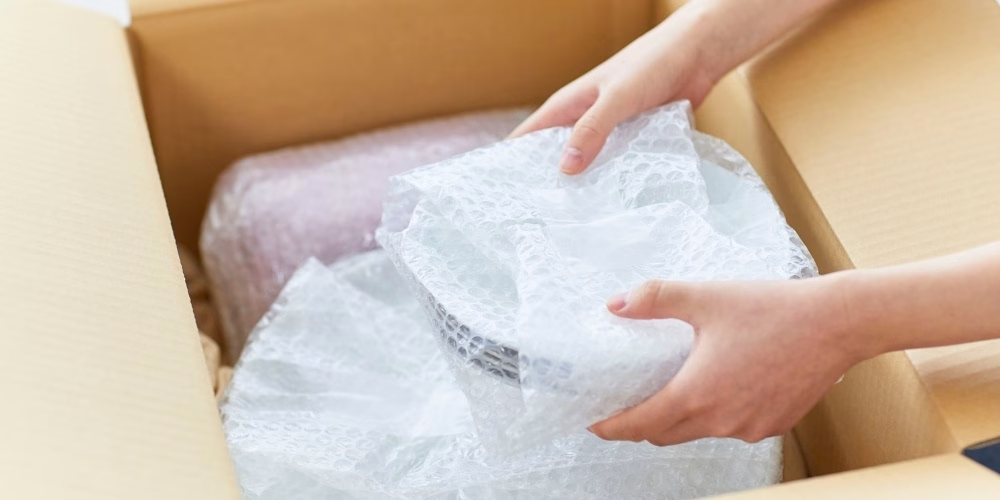
Having the right essential packing supplies on hand before moving day makes a bigger difference than most people expect. The right boxes and materials protect your belongings, speed up the actual packing, and make your movers’ job easier too. The wrong ones (or not enough of them) tend to show up as crushed boxes, broken items, or a move that takes longer and costs more than it should have.
This guide covers what you actually need, how to choose the right box for different kinds of items, and a few packing habits that make the biggest difference based on what we see out in the field.
Key Takeaways
- Use small or medium boxes for heavy items like books and vinyl records, and large boxes for lighter, bulkier things.
- Wrap fragile items in bubble wrap or packing paper depending on what they are, and use specialty dish boxes for glasses and plates.
- Flat screen TVs and monitors should be packed in specialty TV boxes.
- Don’t overpack boxes. A box that’s too heavy to lift safely slows everyone down, including you.
Essential Packing Supplies: The Complete Checklist
Boxes
- Small boxes, for heavy, dense items
- Medium boxes, your everyday workhorse size
- Large boxes, for light, bulky items like bedding or lampshades
- Specialty dish boxes, with dividers for glasses and plates
- TV boxes for flat screens
- Wardrobe boxes, for hanging clothes
Protective materials
- Bubble wrap, for anything with a hard, breakable surface
- Packing paper, for wrapping dishes, glassware, and filling empty space in boxes
- Mattress bags for mattresses and box springs
Sealing and labeling
- Packing tape and a tape dispenser
- Permanent markers for labeling boxes clearly
Choosing the Right Box for Different Items
Box size matters more than people think, and it’s one of the most common packing mistakes we see.
Heavy, dense items like books, vinyl records, and small kitchen appliances belong in small or medium boxes. A large box full of books is often too heavy to carry safely, even if it isn’t technically “full.”
Light, bulky items like bedding, pillows, and lampshades are the opposite case. These belong in large boxes, since weight isn’t the issue and you want fewer boxes overall for the same amount of stuff.
Glasses and plates need a specialty dish packing box with dividers. Standard boxes don’t give fragile dishware the separation it needs, and that’s where a lot of moving breakage happens.
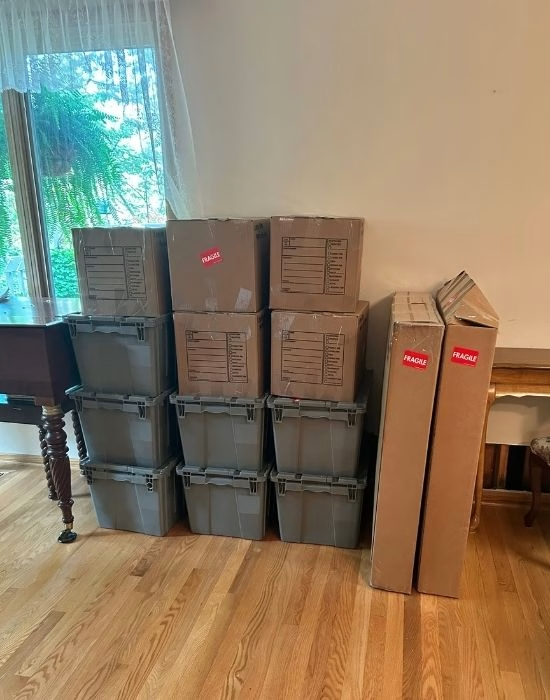
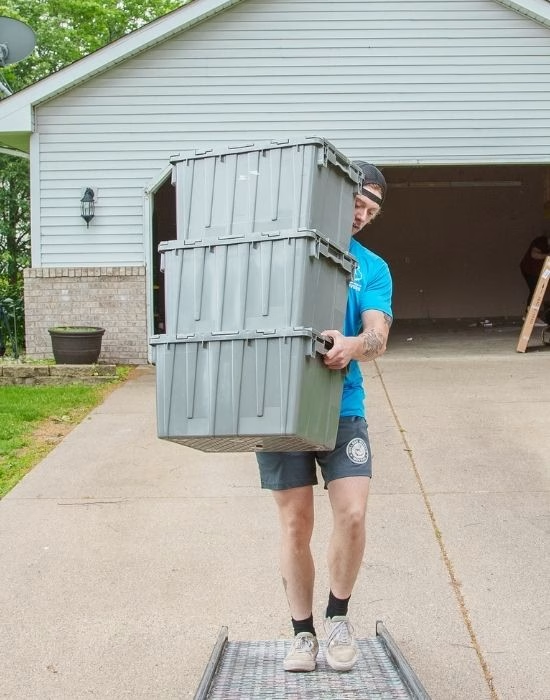
If you’re looking for a sturdy, reusable all-purpose option, College Muscle Movers’ Muscle Boxes are a solid choice. Their sturdy handles, weatherproof construction, and stackability make them easier to carry and safer to stack than standard cardboard, especially useful if your move involves any time outside or in a garage.
How to Protect Fragile Items
Not every fragile item needs the same protection. Bubble wrap works well for items with irregular shapes or delicate surfaces, glassware, ceramics, anything with a stem or handle that could snap. Packing paper is better for flat items like plates (stacked with paper between each one) or for filling empty space so nothing shifts in transit.
A good rule of thumb: if you’d wince watching someone drop it, it needs real wrapping, not just a few sheets of paper tossed in on top.
Check out our full guide on how to pack fragile items for a move.
Packing Mistakes that Slow Down Your Move
A few habits make the biggest difference in how smoothly moving day goes:
Don’t overpack boxes. A box that’s too heavy isn’t just hard to lift, it’s more likely to fail at the bottom or get set down wrong. If you can’t comfortably lift it, it’s too heavy.
Don’t mix fragile and heavy items in the same box. A dish on the bottom under a stack of books doesn’t survive that combination.
Don’t wait until moving day to stage boxes. Staging your packed boxes in neat piles near the door lets your movers grab and go instead of hunting room to room. It’s a small thing that adds up to real time saved, and time is often money on moving day.
In my experience, the quality of a packing job has a direct impact on how long the actual move takes, and what it ends up costing. A well-packed, well-staged home moves noticeably faster than one where boxes are scattered, overstuffed, or still being taped shut when the crew arrives.
Where to Get Packing Supplies in the Twin Cities
If you’d rather not track down supplies from multiple stores, College Muscle Movers’ moving supplies page carries boxes, bubble wrap, TV protection, and more, with pickup or delivery available.
Supplies can be picked up at their warehouse in the Midway neighborhood of St. Paul (720 Prior Ave N), or delivered for a $25 fee within 30 miles round-trip of the warehouse ($1.50 per additional mile beyond that). They also offer tiered discounts on supply orders: 10% off orders of $50 or more, 15% off $100 or more, and 20% off $200 or more.
FAQs About Essential Packing Supplies
What are the most essential packing supplies for a move?
At a minimum, you’ll want boxes in a few sizes, bubble wrap or packing paper for fragile items, packing tape, and markers for labeling. Specialty dish boxes and wardrobe boxes are worth adding if you have glassware or hanging clothes.
Should I use small or large boxes for heavy items?
Small or medium boxes. A large box filled with heavy items like books is often too heavy to lift safely, even if there’s room left in the box.
What is the best all-purpose moving box?
A sturdy, reusable plastic box like College Muscle Movers’ Muscle Boxes holds up better than standard cardboard, especially for stacking or any time spent outside during the move.
How can I speed up my move with the supplies I already have?
Stage your packed boxes in neat piles near the door before your movers arrive. It lets them work faster instead of hunting through the house room by room.
Get an Accurate Quote From Twin Cities Professional Packers
Need help with the packing itself, not just the supplies? Keepsake’s packing services can handle it for you, or see our room-by-room packing guide if you’re tackling it yourself.
About the Author
Claire Hensley
Cleaning Specialist
Claire Hensley is a cleaning specialist at Keepsake PCO with hands-on experience helping Twin Cities homeowners maintain cleaner, more comfortable homes. Claire writes about cleaning tips, home maintenance, and what professional cleaning actually looks like from the inside.
More Motivation & Tips

Mid-Summer Reset: A Room-by-Room Cleaning Checklist
Feeling overwhelmed by summer mess? This room-by-room mid-summer reset checklist helps you restore order without spending all day cleaning.

How Does a Clean Home Affect Your Health and Happiness?
A cleaner home can help you feel calmer, sleep better, and get sick less often. Here’s how a tidy space supports your health and happiness.