
How to Declutter Before Moving (and Why It Makes Your Move So Much Better)
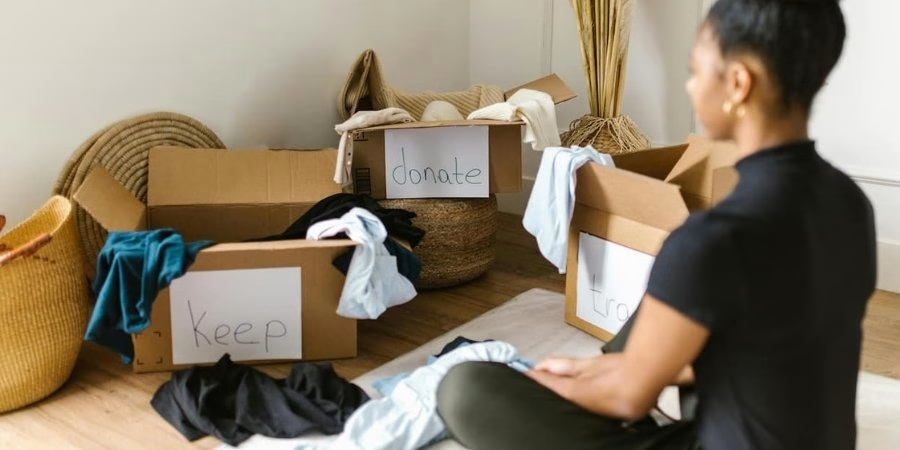
When you have a move coming up, one of the best things you can do for yourself is declutter your home first. Learning how to declutter before moving will make the whole process easier and help you save money in the long run. Getting rid of things you no longer need means less to pack and less to load into the truck. It also means fewer unwanted items finding their way into your new home, giving you a genuine fresh start.
At Keepsake PCO, we have a passion for well-organized spaces and firsthand experience helping Twin Cities residents prepare for a move. We regularly work alongside our partners at College Muscle Movers, packing up homes and getting spaces ready before moving day. That experience informs everything in this guide, including the room-by-room checklist we put together at the end.
Why Decluttering Before a Move Can Actually Save You Money
Every item you keep is an item that gets packed, carried, loaded onto a truck, unloaded, and unpacked. When you think of it that way, clutter has a real cost in terms of time, energy, and sometimes in moving fees.
A good rule of thumb: aim to leave your current home 10% lighter than when you arrived. That’s not a dramatic purge. It’s just a thoughtful reduction that will make unpacking feel manageable instead of endless.
What to Get Rid of Before You Move, Room by Room
The fastest way to get overwhelmed is to think about the whole house at once. Instead, focus on tackling one room at a time. Here’s what to look for in each space.
Entryway
Start here — it’s small and helps you build some momentum. Open the closet and look honestly at what’s hanging there.
- Is there a jacket you haven’t worn in a year or more?
- Shoes that don’t fit, don’t get worn, or don’t have a match?
The entryway is often a drop zone for things that never found a permanent home. If something has been sitting here for a year without a purpose, it probably won’t find one in your next home either.
Living Room
This is where you can make a big impact on the volume of stuff you plan to move. Go through all your furniture, books, and the decorative objects that seemed essential when you bought them.
- Take a hard look at larger pieces. That armchair or end table you’ve been working around might not be worth the truck space. Moving is a natural moment to rethink your layout from scratch, and a more open feel in your new home often starts with leaving something behind.
- Browse your bookshelves. Make room for new reads by letting go of the ones that meant the least. A good neighborhood library or a Little Free Library is a fine destination for a book you’ll never open again.
Kitchen
Kitchens tend to accumulate quietly. Drawers fill with gadgets. Cabinets overflow with dishes for households twice the size you are now.
- Pull out anything that’s on its last legs. Look for chipped dishes, dull knives, or appliances that haven’t worked right in months.
- Think about duplicates. Do you need four spatulas? Three colanders?
- That specialty gadget you used exactly once is a good candidate to let go.
Bedrooms and Closets
Clothing is the biggest opportunity in many homes. We tend to add to our wardrobes much more often than we pare them down.
- If you got something for a specific event and never wore it again, it can go.
- If something doesn’t fit right now, be honest: will it fit before your next move?
- If you haven’t worn it in a year, there’s a real chance you won’t wear it in the next one either.
Closets also hide the things we move from place to place without ever really keeping: old electronics, mystery cables, items we’re “saving” without knowing what for.
Bathroom
Bathrooms are quick to go through and surprisingly easy to edit. Most of what’s in there either gets used or it doesn’t.
- Check expiration dates on medications and over-the-counter products. Anything expired should be disposed of properly. Many pharmacies accept unused medications, and Hennepin County has a drug take-back option, as does Ramsey County.
- Toiletries you bought, tried once, and abandoned don’t need to come with you. If it’s been sitting behind something else for six months, let it go.
- Duplicate products — three half-empty bottles of the same shampoo, a drawer of lip balms — are worth consolidating before you pack.
The bathroom won’t save you a lot of box space, but it getting rid of old products will help keep your new bathroom organized and clutter-free.
When Letting Go Feels Hard
Even with the best intentions, some things are difficult to release. Here are a few mindset shifts that can help:
Ask a different question. Instead of “do I want to get rid of this?”, ask “does this deserve space in my next home?” You’re not throwing something away, you’re deciding what comes with you into the next chapter.
Think about the item’s next life. Something sitting unused in your closet could be genuinely useful to someone else. Donating or selling means the object gets used. That’s a better outcome than moving it one more time and eventually throwing it away.
Remember the other side of the move. The relief of unpacking only what you need and love — without mystery boxes of things you’re not sure what to do with — is significant. The decluttering you do now shows up as real calm on moving day.
How to Get Rid of What You’re Leaving Behind
Deciding to let something go is one thing. Getting it out of your house is another. Here are the most practical options for Twin Cities residents.
Facebook Marketplace
For furniture, electronics, and anything with resale value, Facebook Marketplace is often the easiest option. Price things to move quickly — you don’t need top dollar, you need them gone before moving day. The buyer comes to you, which is convenient when you’re already busy.
Bridging
Bridging is a Twin Cities nonprofit that provides donated furniture and household goods to families transitioning to housing stability. Since 1987, they’ve served more than 120,000 households and divert 14 million pounds from landfills each year. They have three Twin Cities locations — Roseville, Bloomington, and Plymouth — and accept gently used furniture, household goods, small appliances, and more. Check their website for the current accepted items list and drop-off hours before you load up the car.
College Muscle Movers Furniture Disposal
Not everything is in condition to donate, and non-profits like Bridging have standards for what they can accept. If you have pieces that don’t qualify, or you simply want the most convenient option, College Muscle Movers offers a furniture disposal service that handles removal responsibly. Items can be added to your moving service, so you’re not making a separate trip or renting a separate vehicle. It’s a practical option for the pieces that have genuinely run their course.
A Note on Timing
The earlier you start decluttering, the easier it is. When you’re working against a moving deadline, decisions that should take two seconds start to feel harder. Give yourself at least a few weeks — ideally a month or more — to go through things room by room without pressure.
A good approach: start with the spaces you use least. Storage closets, the basement, the garage. These areas tend to hold the highest density of things-you-forgot-you-owned, and clearing them first builds real momentum before you get to the rooms that require more thought.
Declutter Before Moving Checklist
Use this as a quick reference as you go room by room. Check off each area once you’ve made your decisions — you don’t need to remove everything at once, just decide what’s staying and what’s going.
Jackets and coats not worn in a year or more
Shoes that don’t fit, aren’t worn, or are missing a pair
Bags, accessories, or gear with no clear purpose
Furniture pieces not worth moving to the new space
Books you won’t read again
Decorative items that don’t feel essential
Appliances that don’t work well or haven’t been used
Chipped, cracked, or excess dishes and cookware
Duplicate utensils and gadgets
Clothes not worn in the past year
Items bought for a specific event and never used again
Old electronics, mystery cables, and unused gear
Expired medications (dispose of properly)
Toiletries that were tried once and abandoned
Duplicate or nearly-empty products
Items you’ve moved before without using
Broken tools or equipment
Anything you’ve been “saving” without a specific plan
Get More Help With Your Move
Once you’ve decided what’s coming with you, the next step is getting your current home move-out ready and your new home set up for a fresh start. Keepsake PCO offers move-out cleaning and packing services across the Twin Cities — so you can hand off the last details and focus on what actually matters: settling in.
Get a quote from Keepsake PCO for move-out cleaning or packing services.
About the Author

Claire Hensley
Cleaning Specialist
Claire Hensley is a cleaning specialist at Keepsake PCO with hands-on experience helping Twin Cities homeowners maintain cleaner, more comfortable homes. Claire writes about cleaning tips, home maintenance, and what professional cleaning actually looks like from the inside.
More Motivation & Tips

DIY Packing vs. Hiring a Packing Service: How to Decide
DIY packing vs. hiring a packing service? Compare real Twin Cities costs, time, and breakage risk, plus a simple way to decide what fits your move.
How Long Does It Take to Pack a House? Real Twin Cities Data
How long does it take to pack a house? Real Keepsake data shows professional packing times by home size, room estimates, and DIY timelines.
Essential Packing Supplies for Your Move
Essential packing supplies for a Twin Cities move, from a packing pro. What to buy, what to skip, and how to protect your belongings.